
- Description
-
Details
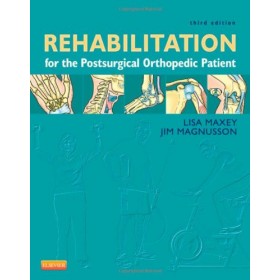
Share A Course: Rehabilitation for the Postsurgical Orthopedic Patient, 3rd Ed: Module 2 SKU: 772S Do you already have access to the reading materials and only need the testing materials? Are you planning to Share A Course with someone else who already has the reading materials? This package includes only the testing materials for the course and not the required reading materials. These courses are offered in cooperation with Elsevier Health and utilize the hardback textbook, “Rehabilitation for the Postsurgical Orthopedic Patient, 3rd Edition", c2013 by Lisa Maxey & Jim Magnusson. Replacing 2 of our most popular courses from the 2nd Edition, this new edition provides current, evidence-based guidelines to designing effective rehabilitation strategies. Coverage of each condition includes an overview of the orthopedic patient’s entire course of treatment from pre- to post-surgery. For each phase of rehabilitation, this book describes the postoperative timeline, the goals, potential complications and precautions, and appropriate therapeutic procedures. These courses are essential to both inpatient and outpatient physical and occupational therapists, physical and occupational therapy assistants and athletic trainers who deal with postsurgical orthopedic cases! Module 1: covers shoulder acromioplasty, anterior capsular reconstruction, rotator cuff repair and rehabilitation, and superior labral anterior/posterior repair. Module 2: covers total shoulder arthroplasty, extensor brevis release & lateral epicondylectomy, reconstruction of the ulnar collateral ligament with ulnar nerve transposition and platelet rich plasma therapy. Module 3: covers primary flexor tendon repair in the digit, carpal tunnel release, transitioning the throwing athlete back to the field, and anterior cervical discectomy and fusion. Module 4: covers posterior lumbar arthroscopic discectomy, lumbar spine fusion and lumbar spine disc replacement. Module 5: covers total hip arthroplasty, hip arthroscopy, hip ORIF, ACL reconstruction and arthroscopic lateral retinaculum release. Module 6: covers meniscectomy and meniscal repair, autologous chondrocyte implantation, ORIF of the patella, total knee arthroplasty and lateral ligament repair of the ankle. Module 7: covers ORIF of the ankle, ankle arthroscopy, achilles tendon repair and bunionectomies. Course Length: 10.0 contact hours Instructional Level: Intermediate This package includes only the testing materials for Module 2 and NOT the required reading materials. Rehabilitation for the Postsurgical Orthopedic Patient, 3rd Ed: Module 2 GOALS AND OBJECTIVES Course Goals: This course is intended to instruct the student through self paced study on providing intervention for the patient after total shoulder arthroplasty, extensor brevis release and lateral epicondylectomy, reconstruction of the ulnar collateral ligament and ulnar nerve transposition, and platelet rich plasma therapy. Student Objectives: At the end of this course, the student will be able to: 1. Understand the position of the patient in the surgical procedure for total shoulder arthroplasty (TSA). 2. Evaluate the function of the 4 rotator cuff muscles in the first 6 weeks after TSA. 3. Understand goals of rehabilitation after a non-traumatic TSA. 4. Understand post-surgical range of motion restrictions after TSA. 5. Analyze the pendulum exercise. 6. Understand flexion range of motion goals after TSA. 7. Evaluate 4 different exercises early in rehabilitation after TSA. 8. Understand accessory motions to overhead motion after TSA. 9. Understand range of motion goals in late rehabilitation after TSA. 10. Analyze rehabilitation techniques in late rehabilitation after TSA. 11. Evaluate the reasons for poor progress in late rehabilitation following TSA. 12. Analyze the possible return to sports after TSA. 13. Evaluate 4 common movement dysfunctions after TSA. 14. Understand the role of 4 different muscles in depressing the humeral head. 15. Analyze the Nirshl tendinosis pain scale. 16. Evaluate the surgical incision in an extensor carpi radialis brevis (ECRB) release. 17. Understand 4 exercises in early rehabilitation after an ECRB release. 18. Analyze a home exercise program after ECRB release. 19. Analyze a progressive strengthening program after ECRB release. 20. Evaluate grip strength after ECRB release. 21. Understand the arthrokinematics of the humeroulnar joint. 22. Analyze the arthrokinematics of valgus stress to the ulnar collateral ligament (UCL). 23. Understand the mechanical advantage of 4 different elbow flexors. 24. Evaluate medial elbow instability in 4 different patient populations. 25. Analyze the procedure for ulnar nerve transposition in repair of the UCL. 26. Analyze the position of the elbow after UCL graft surgery. 27. Evaluate 4 different shoulder exercises after UCL graft surgery. 28. Understand 5 different muscles contributions to dynamic stabilization of the medial elbow after reconstruction of the UCL. 29. Evaluate a stretching program after reconstruction of the UCL. 30. Analyze a return to pitching program for a baseball pitcher after UCL reconstruction. 31. Understand the relationship between bioactive factors and platelet granules. 32. Analyze the time frame for the release of growth factors after an injury. 33. Understand the role of vascular endothelial growth factor on 4 different cells in the body. 34. Evaluate stage II of tissue healing. 35. Understand the procedure for platelet rich plasma therapy (PRP). 36. Understand the inflammatory phase after PRP. 37. Evaluate the use of deep soft tissue techniques after PRP. 38. Analyze the time frame for full elbow passive range of motion after PRP on the UCL. 39. Evaluate the protocol to return an athlete to play after PRP. - Additional Information
-
Additional Information
Other Products of Interest
-
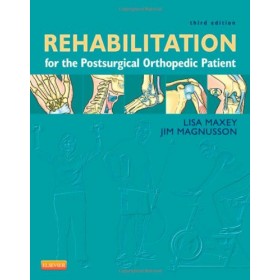
Rehabilitation for the Postsurgical Orthopedic Patient, 3rd Ed: Module 2
$149.95 -
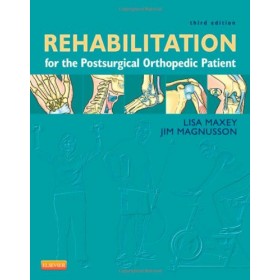
Rehabilitation for the Postsurgical Orthopedic Patient, 3rd Ed: Module 2 (Electronic Download)
$129.95 -
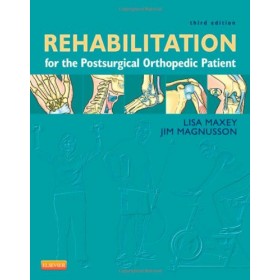
Share A Course: Rehabilitation for the Postsurgical Orthopedic Patient, 3rd Ed: Module 2 (Electronic Download)
$100.00 -
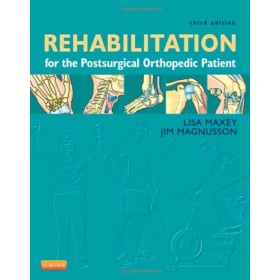
Rehabilitation for the Postsurgical Orthopedic Patient, 3rd Ed Combo Pack
$279.95 -
Rehabilitation for the Postsurgical Orthopedic Patient, 3rd Ed Triple Pack
$389.95 -
Rehabilitation for the Postsurgical Orthopedic Patient, 3rd Ed Bundle Pack
$479.95 -
Rehabilitation for the Postsurgical Orthopedic Patient, 3rd Ed Value Pack
$679.95
Recently Viewed Products

Related Products
Check items to add to the cart or select all